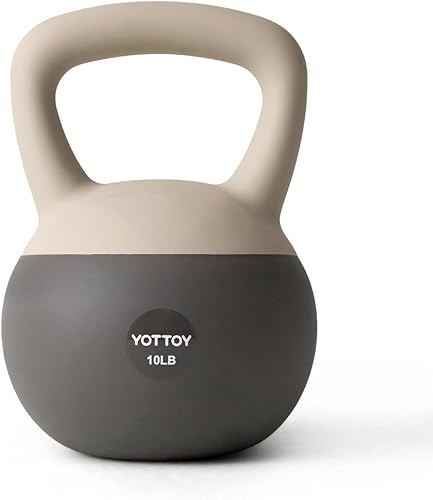
YOTTOY W-10 Kettlebell Review
Our verdict
The YOTTOY W-10 costs $39.99 for a 10-pound PVC-coated kettlebell, roughly double the price of the similarly rated Sunny NO. 066-5's 5-pound cast iron option at $16.21. Its 4.5-star rating across 312 reviews shows steady satisfaction, but buyers focused purely on cost per pound will find better value elsewhere in this lineup.
Check price on AmazonBest for
Best for buyers who want a mid-weight, 10-pound kettlebell with a soft PVC coating for home use, and who value the 312-review track record and 4.5-star average enough to pay a premium over lighter cast iron alternatives.
Skip if
Skip it if price per pound of resistance is the deciding factor. At $39.99 for 10 pounds, it costs more than double the Sunny NO. 066-5's $16.21 for 5 pounds of cast iron, and budget-focused buyers may prefer that trade-off instead.
- Material Polyvinyl Chloride
- Weight 10 Pounds
- Color 10LB-White
- Feature Weight Training, Resistance Training
Our scorecard
-
Owner rating4.5/5
4.5 average across 312 owner ratings
-
Popularity2.4/5
312 owner reviews, fewer than most models here
The overall score is owner satisfaction weighted by how many reviews back it, so a high rating from few reviews counts for less. The bars below show where this model stands against the other home gym and fitness equipment we track in this category on price, popularity and size. Context, not marks against it, and our read of the data, not a lab test.
Overview
Someone furnishing a first home gym and wanting a single kettlebell that covers general strength and resistance work is the buyer the YOTTOY W-10 targets. At $39.99, it offers 10 pounds of resistance in a PVC-coated shell, positioning it between the lightest novelty bells and the heavier cast iron options in this category.
The polyvinyl chloride coating is the defining spec here. It gives the bell a softer grip and quieter set-down than bare cast iron, while the 10-pound weight sits comfortably above the 5-pound Sunny NO. 066-5 and well below serious heavy-lifting territory. The listing tags it for weight training and resistance training, both of which fit a 10-pound load reasonably well for beginners to intermediate users.
Priced against the field, the W-10 is not the cheapest option. The Sunny NO. 066-5 costs $16.21 for 5 pounds of cast iron and carries 2,600 reviews at 4.6 stars, while the JFIT J-VKB8 runs $18.99 with 784 reviews at 4.8 stars. The W-10's own 312 reviews at 4.5 stars and 100+ bought last month suggest a smaller but reasonably satisfied buyer group, likely drawn to the coated finish and the 10-pound step up in weight rather than raw price.
Pros
- 10 pounds of resistance suits general strength training better than lighter novelty kettlebells.
- PVC coating offers a softer, quieter feel than bare cast iron.
- 4.5-star rating across 312 reviews shows a solid, established track record.
- 100+ bought last month indicates consistent ongoing demand.
- In stock and available without wait.
Cons
- At $39.99, it costs more than double the Sunny NO. 066-5's $16.21 for a cast iron bell.
- 4.5-star average trails both the Sunny (4.6 stars) and JFIT (4.8 stars) alternatives.
- 10 pounds is a single fixed weight with no adjustability for progression.
- PVC coating may wear differently over time than solid cast iron.
- Bought last month at 100+ trails the Sunny's 400+ and JFIT's 300+, suggesting narrower demand.
Specifications
| Material | Polyvinyl Chloride |
|---|---|
| Weight | 10 Pounds |
| Color | 10LB-White |
| Feature | Weight Training, Resistance Training |
Performance notes
A 10-pound kettlebell lands in a useful middle ground, heavy enough for goblet squats, swings, and rows for someone past the absolute beginner stage, but still manageable for higher-rep work compared to heavier bells. The polyvinyl chloride coating changes how the bell behaves on contact with the floor, cushioning the sound and reducing the risk of chips or dents compared to bare cast iron, which matters for home setups near hardwood or tile. The weight training and resistance training feature tags both fit a 10-pound load reasonably well, since that weight can support general strength work without requiring a full set. Because this is a single fixed weight, there is no built-in way to progress, so buyers who expect to outgrow 10 pounds quickly should think about a set or plan to add heavier bells later rather than expecting this one to scale with them.
What buyers say
A 4.5-star average across 312 reviews puts the YOTTOY W-10 in solid but not top-tier territory compared to this field. The Sunny NO. 066-5 edges it out slightly at 4.6 stars, and it does so across a much larger 2,600-review base, while the JFIT J-VKB8 leads at 4.8 stars over 784 reviews. The W-10's 100+ bought last month is the lowest figure among the actively selling options here, trailing the Sunny's 400+ and JFIT's 300+. Read together, the pattern suggests the W-10 has a real but smaller following, likely buyers specifically wanting a 10-pound coated bell, rather than the broad appeal that drives the higher review counts and purchase volumes of its cheaper rivals.
More from YOTTOY
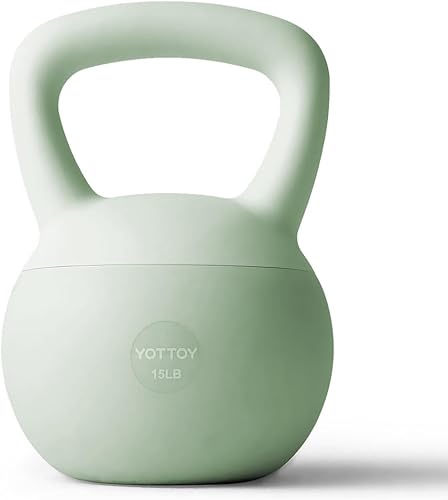
Similar home gym and fitness equipment to consider


Frequently asked questions
Is the YOTTOY W-10 kettlebell a good value at $39.99?
It depends on priorities. At $39.99 for 10 pounds, it costs more per pound than the Sunny NO. 066-5's $16.21 for 5 pounds of cast iron. If a PVC-coated feel and a specific 10-pound weight matter more than price, the W-10 makes sense, but budget-focused buyers have cheaper options.
What is the YOTTOY W-10 kettlebell made of?
It has a polyvinyl chloride, or PVC, coating rather than bare cast iron, and weighs 10 pounds. The coating typically means a softer grip and a quieter set-down on floors compared to uncoated metal kettlebells, which can matter in shared living spaces or rooms without dedicated gym flooring.
How does the YOTTOY W-10 compare in reviews to other kettlebells?
Its 4.5-star rating across 312 reviews is solid but trails the Sunny NO. 066-5's 4.6 stars over 2,600 reviews and the JFIT J-VKB8's 4.8 stars over 784 reviews. All three ratings sit close together, so review volume and price are likely bigger differentiators than satisfaction level.