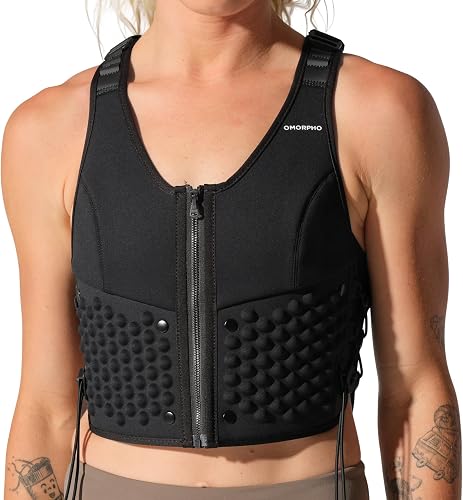
OMORPHO Women's G-Vest Icon Weighted Vest Review
Our verdict
The OMORPHO Women's G-Vest Icon costs $299, by far the most expensive vest in this comparison, and shows a 4.9-star average, but across only 7 reviews and 0-plus units bought last month. The rating looks impressive, but the sample is too small and the demand signal too quiet to weigh it against vests with thousands of reviews.
Check price on AmazonBest for
Best for buyers who specifically want the OMORPHO brand and are comfortable paying a premium, roughly nine to twenty times the price of the other vests here, without a large body of reviews to lean on for reassurance.
Skip if
Skip it if you want proof at scale before spending $299. With only 7 reviews and 0-plus units bought last month, this listing has far less data behind it than the 591 to 2,600 review vests it competes against.
- Priced 733% above the category median ($35.90 across 99 tracked models)
Our scorecard
-
Owner rating4.9/5
4.9 average across 7 owner ratings
-
Popularity0.2/5
7 owner reviews, fewer than most models here
The overall score is owner satisfaction weighted by how many reviews back it, so a high rating from few reviews counts for less. The bars below show where this model stands against the other home gym and fitness equipment we track in this category on price, popularity and size. Context, not marks against it, and our read of the data, not a lab test.
Overview
Imagine deciding between a $299 vest from a niche brand and a $16.99 to $68.94 option that has already sold thousands of units. That is the exact fork buyers hit with the OMORPHO Women's G-Vest Icon. Its 4.9-star rating is the highest of any vest in this comparison, but it comes from just 7 reviews, a fraction of the 591 to 2,600 reviews backing the cheaper alternatives.
No detailed material or weight specs are listed for this ASIN, unlike the other vests in this set, which each give at least a weight and material breakdown. That absence makes it harder to compare the G-Vest Icon on hard numbers beyond price and rating, and buyers considering it would need to check the product listing directly for fit and load details before purchase.
The 0-plus bought-last-month figure stands out next to the 20,000-plus moving on the Zeerun WV10 or 1,000-plus on the Renoj WV1, suggesting this listing sees far less current purchase activity than the budget options in this comparison. A near-perfect rating from a handful of buyers is worth noting, but it does not carry the same weight as a rating built on hundreds or thousands of purchases.
Pros
- Highest star rating of any vest in this comparison at 4.9, ahead of the 4.7-star Renoj and 4.6-star Zeerun and TB3C vests
- Marketed specifically as a women's vest, a distinct positioning from the unisex listings compared here
- Currently in stock and ready to order despite its premium positioning
- A distinct brand name in this category, which may appeal to buyers seeking something other than the generic-sounding vests in this set
- No negative review pattern evident yet, since all 7 reviews contribute to a 4.9-star average
Cons
- Only 7 total reviews, far too few to draw reliable conclusions compared to the hundreds or thousands on other vests
- 0-plus units bought last month, the lowest demand signal of any vest in this comparison
- Priced at $299, between four and eighteen times the cost of the other vests listed here
- No material, weight or size specs provided in this listing, unlike every other vest compared
- Unclear how the fixed or adjustable weight design compares without published specs
Performance notes
Unlike every other vest in this comparison, this listing does not publish a material, weight or size breakdown, which limits how precisely it can be measured against the 10-to-40-pound loads and neoprene, nylon or iron-particle builds detailed elsewhere in this set. The $299 price point places it well above budget and mid-range options, suggesting a premium positioning built around brand and design rather than a headline weight spec. Without published load or fabric details, buyers considering this vest are left comparing largely on price, rating and brand alone rather than the kind of spec-to-spec comparison that separates the other vests in this roundup. That gap in published detail is itself worth factoring into a purchase decision at this price. For a $299 purchase, that missing information is a bigger gap than it would be on a $15 impulse buy.
What buyers say
A 4.9-star average sounds like the strongest showing in this comparison, but it rests on only 7 reviews, compared to 591 on the Amstaff, 825 on the TB3C, 1,100 on the Renoj, 2,100 on the ZFOsports, 2,500 on the Zeerun and 2,600 on the EMPOWER vest. A handful of reviews can swing a full star in either direction with just one or two more data points, so this rating carries far less statistical weight than the others. The 0-plus bought-last-month figure reinforces that reading: unlike the thousands of monthly purchases on the cheaper vests, this listing shows little visible current momentum, which matters more for judging ongoing satisfaction than a small early rating alone.
More from OMORPHO


Similar home gym and fitness equipment to consider


Frequently asked questions
Is the OMORPHO G-Vest Icon's 4.9-star rating trustworthy?
It is a genuinely high average, but it is built on only 7 reviews. Compare that to the 591 to 2,600 reviews behind the other vests in this roundup, and it becomes clear the sample is too small to treat with the same confidence as a rating built on hundreds or thousands of purchases.
Why is the OMORPHO vest so much more expensive than the others?
At $299, it costs roughly four times the ZFOsports vest and up to twenty times the cheapest option, the $14.98 Zeerun. The listing does not publish weight or material specs, so the price premium appears tied to brand and design rather than any stated capacity advantage over the other vests.
Is now a good time to buy the OMORPHO G-Vest Icon?
The 0-plus bought-last-month figure suggests limited recent purchase activity compared to vests like the Zeerun, which shows 20,000-plus. That does not mean the vest is a poor product, but it does mean buyers have less recent purchase data to lean on than they would with a higher-volume listing.